
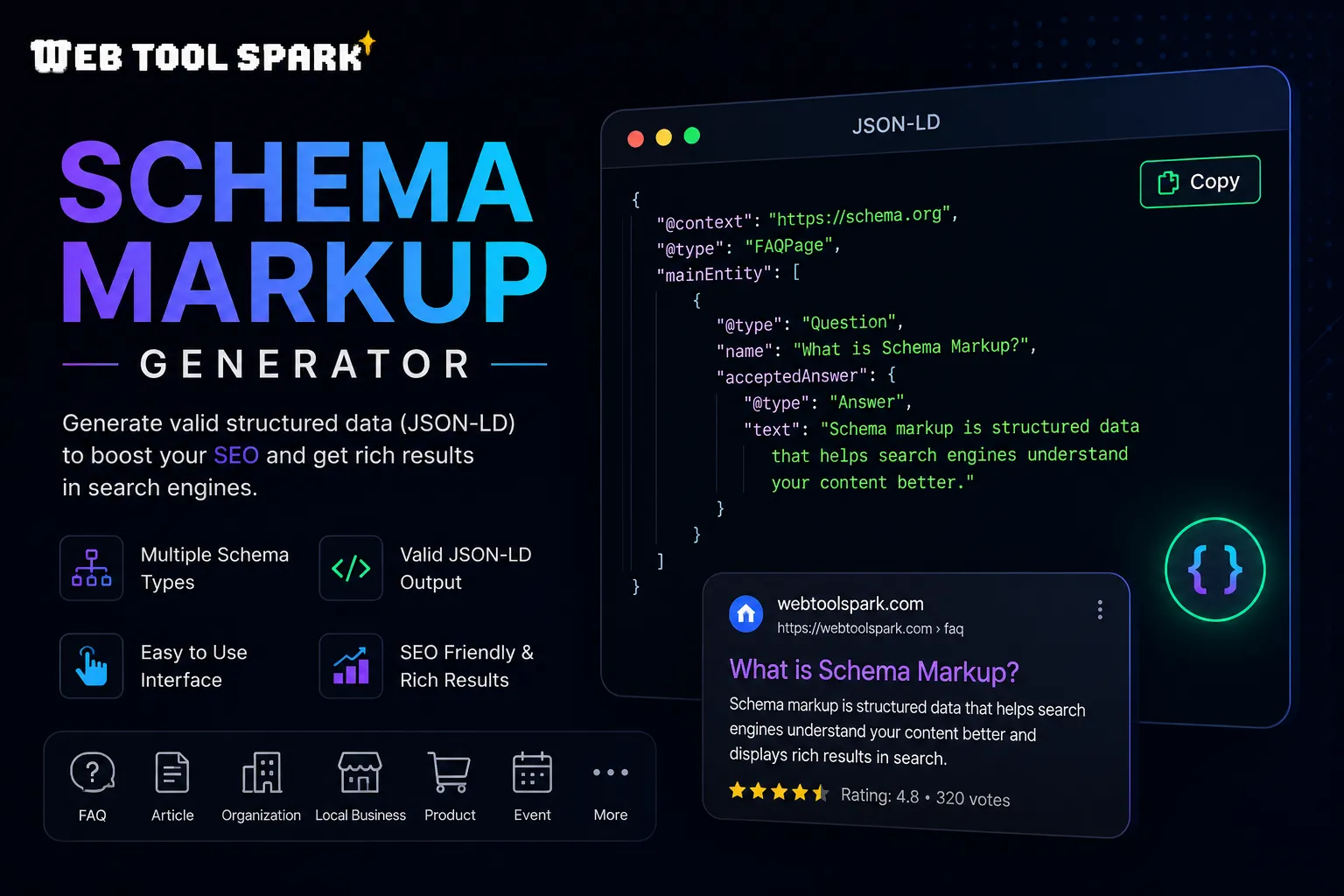
Schema markup is structured data that helps search engines understand your website content more accurately. By adding schema markup to your pages, you can improve how your content appears in search results and increase the chances of earning rich snippets.
Whether you run a blog, business website, eCommerce store, or portfolio, schema markup can help search engines display additional information such as ratings, FAQs, business details, products, events, and more.
👉 Try it now: https://webtoolspark.com/schema-markup-generator/
What Is Schema Markup?
Schema markup is a form of structured data based on the Schema.org vocabulary. It provides search engines like Google with additional context about your content.
For example, instead of simply seeing a page title, search engines can understand whether the page is about a product, article, event, local business, FAQ, or organization.
Benefits of Using Schema Markup
Improve Search Visibility
Schema markup helps search engines better understand your content, which can improve visibility in search results.
Rich Snippets
Pages with structured data may qualify for enhanced search results, including:
- Star ratings
- FAQ dropdowns
- Product information
- Event details
- Business information
- Breadcrumb navigation
Higher Click-Through Rates
Rich search results often attract more attention, leading to increased clicks and traffic.
Better Content Understanding
Structured data provides clear information about your content, products, services, and business details.
Common Types of Schema Markup
FAQ Schema
Displays frequently asked questions directly in search results.
Article Schema
Used for blog posts, news articles, and informational content.
Organization Schema
Provides information about your company or organization.
Local Business Schema
Helps local businesses share important information such as address, phone number, and business hours.
Product Schema
Displays product details, prices, ratings, and availability.
Breadcrumb Schema
Improves site navigation and search result appearance.
Event Schema
Used for conferences, webinars, workshops, and other events.
How to Generate Schema Markup
Creating structured data manually can be complicated. A Schema Markup Generator simplifies the process by generating valid JSON-LD code automatically.
Follow these steps:
- Select the schema type you need.
- Enter the required information.
- Generate the schema markup.
- Copy the JSON-LD code.
- Add the code to your website.
Why Use the WebToolsPark Schema Markup Generator?
The WebToolsPark Schema Markup Generator allows you to:
- Generate valid JSON-LD schema code
- Create multiple schema types
- Copy code instantly
- Save time and reduce errors
- Improve SEO implementation
Best Practices for Schema Markup
- Use accurate information.
- Select the correct schema type.
- Keep business details updated.
- Validate your schema before publishing.
- Follow Google’s structured data guidelines.
Conclusion
Schema markup is one of the easiest ways to improve how search engines understand your content. Whether you run a blog, online store, or business website, structured data can help enhance search visibility and improve user engagement.
Use the WebToolsPark Schema Markup Generator to create clean, valid schema markup quickly and easily without writing code manually.
👉 Check Now: https://webtoolspark.com/schema-markup-generator/

2 Responses
As an SEO specialist, I can say schema markup is one of those optimizations that many people ignore until they see competitors getting rich snippets. 😄 This generator looks very user-friendly and can definitely help streamline the implementation process. I especially appreciate the step-by-step explanation in this post. Great resource for both beginners and experienced SEOs!
Thank you so much for your valuable feedback! 😊
You are absolutely right—schema markup is often underestimated, even though it plays a crucial role in improving search visibility and enhancing SERP appearance through rich results. I am glad you found both the tool and the explanation useful. My goal was to make schema implementation easier and more accessible for SEO professionals as well as beginners.
Really appreciate you taking the time to share your insights. Looking forward to hearing more of your SEO experiences and thoughts on future posts!